
Beyond the Bank
Oct 26, 2026
 |
Welcome back to Beyond the Bank |
JPMorgan won't let outside AI agents log in to your account and pay your bills or move your money, and Schwab says it stops them tens of times a week. Banks are drawing a line: AI can look, but it can't touch.
This week: why the biggest banks are locking out AI agents and who pays if one goes wrong, the OCC's final stablecoin rule, a Michigan credit union buying a Florida bank, and a simple way to keep an AI helper read-only. Plus FedNow's latest numbers. |
Trivia Question❓In 2024, credit unions set a record for buying banks. How many banks did they buy that year? Answer at the bottom of the newsletter |
 |
⚡ FedNow volume jumped in the third quarter. The Fed's instant-payment service settled 6.38 million payments worth $370.9 billion, up 27.6% in volume and 35% in value from the second quarter, according to the Fed's own FedNow statistics page, last updated October 20. That works out to roughly $58,000 per payment on average. For why instant payments are still catching on slowly in the U.S., see our FedNow explainer.
🏛️ The credit union regulator had no board for 17 days. The NCUA had no board members from August 7 to August 24, after its chair left and before his successor was sworn in. Sen. Elizabeth Warren is now asking the agency's inspector general who made decisions in that gap, including whether depositors at a liquidated credit union, African Diaspora Federal Credit Union in Missouri, were made whole. Read more (Banking Dive)
🌍 Europe has its first "significant" stablecoin. On October 14, the European Banking Authority classified Circle's USDC as the first significant e-money token under the EU's MiCA rules. From November 12, the EBA takes over supervision of its reserves, liquidity and redemption plans from France's regulator. It's a Europe-only decision, but it shows where stablecoin oversight is heading. Read more (EBA) |
 |
You can hand an AI assistant a lot of chores. Your bank login is now one the biggest banks say it can't have.
On October 13, on JPMorgan's third-quarter earnings call, CEO Jamie Dimon said the bank won't let "just any outside agent" into its systems. "You don't want rogue agents, and there could be thousands of them," he said, PYMNTS reported. AI agents are programs that carry out tasks on their own, such as shopping or paying a bill. Meta's Muse, which can book, buy and negotiate for users, is one example.
What's blocked: a JPMorgan spokeswoman told CNBC that outside agents can't log in with a customer's credentials or act for them, The Paypers reported. Tools connected through an authorized data connector, such as Plaid, can view some information like balances, read-only. They can't send money or pay bills, and the bank gave no timeline for changing that.
Schwab is doing the same. CEO Rick Wurster said Schwab won't allow agents to use client logins or browser automation: "We are not going to allow that," American Banker reported. Clients are pointed to Schwab's own assistant, Charley. Schwab will also set up connections, called MCP servers, that let a client's chosen AI model check balances and do research under Schwab's rules, but not move money. Wurster said large agents get stopped "tens of times a week," which he reads as a sign clients aren't ready to hand over their accounts, The Next Web reported.
Security or self-interest? Both, perhaps. One analyst told American Banker the move also protects Schwab's cash-sweep income, about $3.48 billion in net interest revenue last quarter on roughly $493 billion in sweep accounts.
Why it matters: the real fight is over liability. Dimon told customers to understand "the liability transfer" when they share logins with an agent. Wurster asked: "Something could go wrong and who's liable?" The U.S. has no clear answer yet. Until it does, expect banks to allow looking and block acting. Our open banking explainer covers how linked apps get your data today. |
 |
The rules for who can issue a "digital dollar" in the U.S. just got a lot more concrete.
On October 21, the Office of the Comptroller of the Currency (OCC), the main regulator of national banks, issued its final rule implementing the GENIUS Act, the 2025 law that sets federal rules for payment stablecoins. A stablecoin is a digital token designed to hold a steady value, usually $1.
The rule covers reserve assets, redemption, risk management, custody, licensing, and capital and operational backstops. It applies to issuers the OCC oversees, including subsidiaries of national banks and federal savings associations, federally approved nonbank issuers, some state-qualified issuers, and foreign issuers, Decrypt reported. It takes effect January 18, 2027, the same day the law does.
Not covered yet: anti-money-laundering and sanctions requirements, which the OCC will handle in a separate rulemaking with Treasury. The OCC also hasn't said when it will start accepting applications.
Why it matters: this is the rulebook banks needed before issuing their own stablecoins. Nothing changes in your checking account. A stablecoin isn't a bank deposit, as we explained in our look at the Fed's parallel proposals. This is a rules story, not a tip to buy anything. Watch for the application window, and for the Fed's rules, still in draft. |
 |
Credit unions are known for being small and local. Some are now shopping for banks.
On October 19, Dearborn, Michigan-based DFCU Financial, a credit union with about $8 billion in assets, announced it will acquire Gulfside Bank of Sarasota, Florida, Banking Dive reported. Gulfside has two branches, $344.6 million in assets and $294 million in deposits as of June 30. The price wasn't disclosed, and no closing date was given. DFCU plans to rebrand the branches and integrate services in the second half of 2027.
It's DFCU's fourth Florida expansion in four years, and the eighth bank bought by a credit union in 2026. Credit unions set a record for bank purchases in 2024, and the pace has slowed since.
The debate: the Independent Community Bankers of America argues these deals reduce lending to small businesses in local communities and wants policymakers to address credit unions' tax and regulatory exemptions. America's Credit Unions CEO Scott Simpson warns that tax changes could hurt how credit unions serve consumers, and cites 146 million U.S. credit union members.
Why it matters: credit unions are member-owned, not-for-profit alternatives to banks, and some are growing by acquisition. Gulfside customers see no change yet, and the rebranding comes in 2027. If your own bank is ever sold, read the notices carefully. For the basics, see how credit unions differ from banks. |
Interesting Facts |
Banking has evolved far beyond marble lobbies and checkbooks. Here are some lesser-known corners of the financial world worth knowing about.
|
 |
The tool: any mainstream AI chat assistant. The job: getting help with your money without giving it the keys to your accounts.
Why now: JPMorgan and Schwab both block outside AI agents that log in with your username and password, and both still allow read-only views of things like balances. That's a good rule to copy at home.
How to do it:
Mind the risk: if you do share credentials with an agent, JPMorgan's CEO warned you may take on "the liability transfer." Who covers a loss is unsettled, so don't count on a bank to make it right. |
LAST WEEK ON BEYOND THE BANK |
Missed these? The week's biggest explainer was on the stalled open banking rule and what it means for the apps linked to your bank, plus how credit unions differ from banks. |
 |
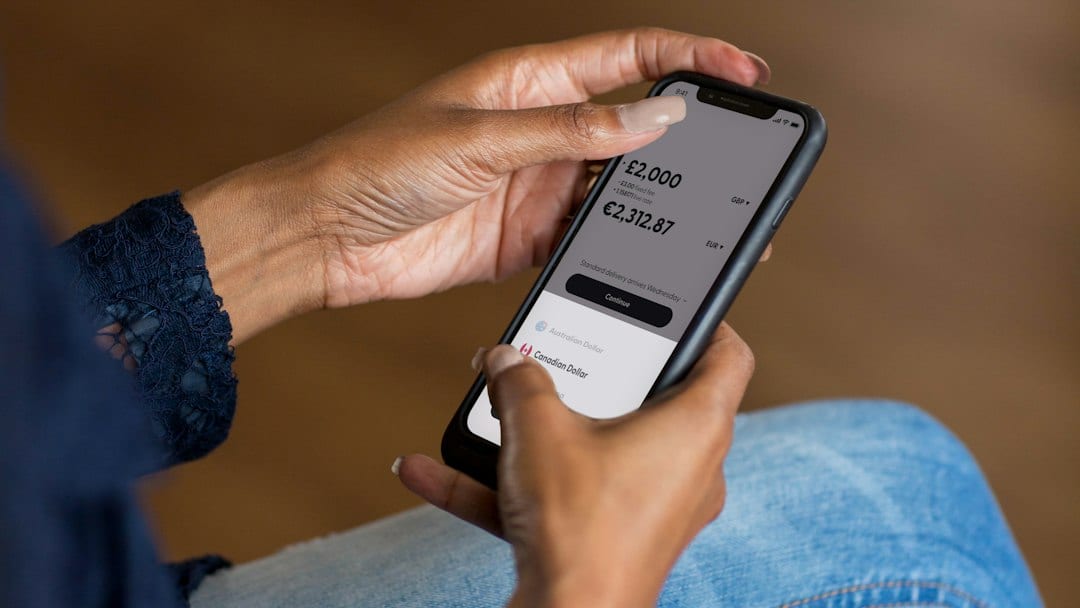
If you've linked a budgeting or payment app to your bank, you've used open banking, and the federal rule meant to govern it is frozen in court. Banks may soon charge apps for your data, which could mean higher prices or fewer supported banks. Here's what to check in your own accounts now. Read More... |

Credit unions now count 146.1 million members and $2.50 trillion in assets, yet their number keeps shrinking as small ones merge. They're member-owned and not-for-profit, with deposits insured to the same $250,000 limit as banks. See how they differ and when one might fit you. Read More... |

One attacker used AI agents and an open-source tool to break into multiple South Korean financial firms in a few weeks, exposing about 25,000 Shinhan Bank customers' data. AI let one person do a team's work. Read the simple steps that protect your own accounts. Read More... |
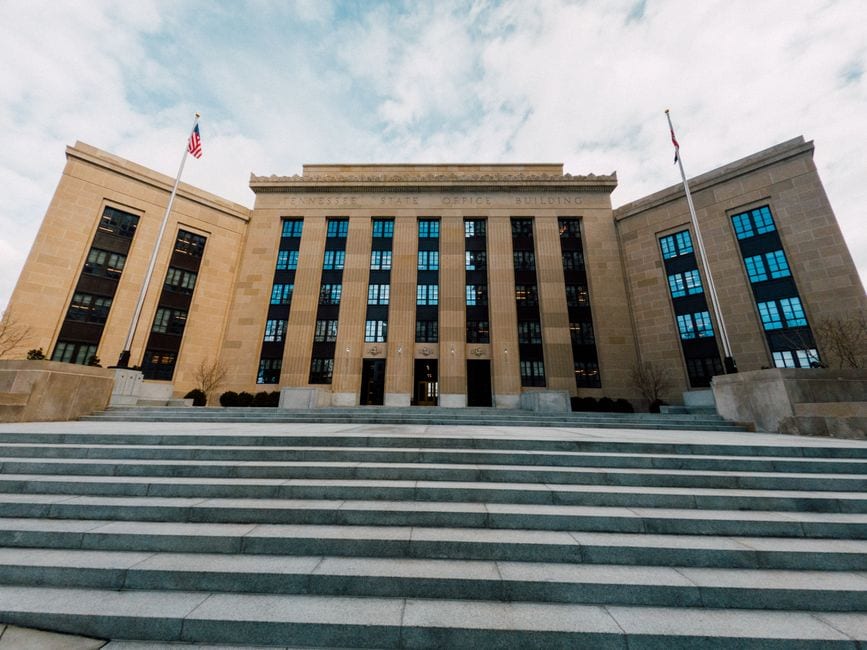
The Federal Reserve proposed rules for banks that want to issue stablecoins: one-for-one reserves, redemption within two business days and no interest for holding. A stablecoin is still not an FDIC-insured deposit. Here's what the proposals mean and when comments are due. Read More... |
JOKE OF THE WEEK |
My bank says my AI assistant can look at my balance but can't touch my money.
So now it just stares at the number and sighs. Honestly, relatable. |
 |
Know someone who should be reading this? Forward this email, or send them to beyondthebank.capital to subscribe free. New issue every Monday.
Missed an issue? Read the latest issue online or browse past issues.
Questions, tips or story ideas? Email us at contact@beyondthebank.capital.
Beyond the Bank is for informational purposes only and is not financial, legal, or investment advice. |
💡 Answer to Trivia Question: 22. Credit unions bought a record 22 banks in 2024 and 16 in 2025, Banking Dive reports. This year's count stands at eight. |