The Open Banking Rule Is Stuck. Here's What It Means for Your Linked Apps |
A court has blocked it and the CFPB is rewriting it, possibly letting banks charge fees for your data. One big bank already does. |
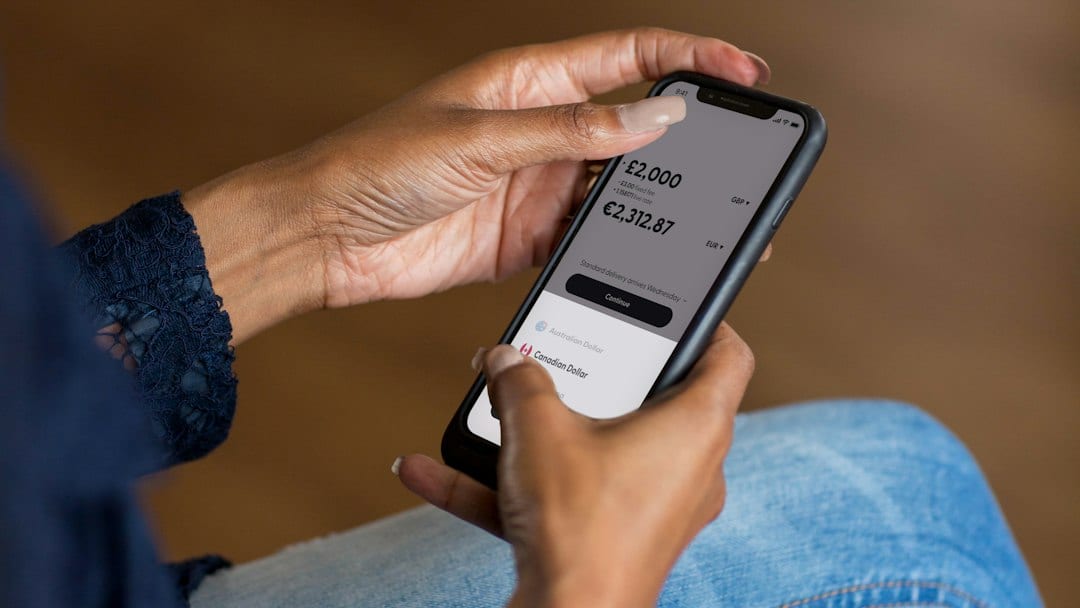
If you've ever connected a budgeting app, a payment app or an investing app to your bank account, you've used "open banking." The federal rule meant to govern it has been frozen for a year, and its replacement is still behind closed doors.
What the rule was supposed to do Section 1033 of the Dodd-Frank Act, passed in 2010, gives consumers a right to access their own financial data. The Consumer Financial Protection Bureau finally turned that into a detailed rule in late 2024.
It required banks and card issuers to share your account data, at your request, with you or with apps you authorize, through secure connections instead of the old practice of handing apps your password.
That old practice is called screen scraping: an app logs in as you with your username and password and copies what it sees. It works, but your login details sit with a third party, and it's harder to cut off access later. The rule pushed the industry toward dedicated data connections that you can revoke.
Crucially, it also said banks could not charge fees for that access. Compliance was set to phase in from April 2026 for the largest institutions through 2030 for the smallest.
The CFPB says more than 100 million consumers have used this kind of consumer-authorized data sharing, American Banker reported.
How it got stuck Banking groups, including the Bank Policy Institute and the Kentucky Bankers Association, sued. They argued the law gives data rights to consumers, not to commercial third parties, and that banks should be able to recover the cost of building secure data pipes.
Under new leadership, the CFPB stopped defending the rule. In August 2025 it opened a reconsideration, asking for comment on four questions: who counts as a consumer's "representative," whether banks may charge fees, and how to handle data security and privacy. A federal court in Kentucky has since barred enforcement of the 2024 rule while the CFPB rewrites it, and the April 2026 deadline passed without effect.
On August 6, 2026, the CFPB sent a new proposed rule to the White House for review, according to Ballard Spahr's Consumer Finance Monitor. That review usually takes up to 90 days. The text isn't public yet. Reports cited by PYMNTS suggest one option under consideration is letting banks charge for data access after a set number of free requests. |
 Illustrative photo. Photo by imgix on Unsplash |
Fees are already here The market didn't wait. In September 2025, JPMorgan Chase and data aggregator Plaid announced a deal under which Plaid pays the bank for customer data it used to get free. Neither company disclosed the price. A fintech trade group, the Financial Data and Technology Association, called such fees "unlawful tolls on consumers and competition."
Why it matters This is a fight over who controls your financial data, and who pays to move it.
Banks argue that securing data feeds is expensive and that they carry the risk if something goes wrong. Fintechs argue that fees let big banks tax competitors and slow customers who want to switch.
For you, the likely effects are indirect but real. If data access costs money, some apps may raise prices, add fees, or stop supporting smaller banks and credit unions. On the other hand, a rule that tightens who can act as your "representative" could mean fewer companies holding copies of your data.
What you can do Review your connections. Most bank apps have a security or "connected apps" section that lists the services with access to your account. Remove anything you no longer use.
Read before you link. When an app asks to connect your bank, check which data it wants and whether a middleman is involved.
Watch your statements for new fees from apps that rely on bank data.
What to watch Watch for the CFPB's proposal to appear in the Federal Register, which would open a public comment period. Then watch the fee question. Whatever the rule says about charging for data will shape the economics of every app that touches your bank account.
Sources: CFPB reconsideration page · Consumer Finance Monitor (Aug. 6) · PYMNTS (Aug. 10) · Banking Dive (Sept. 2025)
Beyond the Bank is for informational purposes only and is not financial, legal, or investment advice. |
Get Beyond the Bank in your inbox every Monday. A free, plain-English briefing on AI, banking alternatives and the new rails under your money. Read the latest issue or subscribe free. |
0 Comments
Join the conversation
Be the first to comment
Share your thoughts above.