Beyond Traditional Banking

Latest News

The latest from Beyond The Bank.

Credit Union vs. Bank: The Differences That Actually Affect Your Money

Deposit insurance is the same. Borrowing rates, ownership and who can join are not.
Beyond the Bank

Beyond the Bank

Oct 26, 2026
Credit Union vs. Bank: The Differences That Actually Affect Your Money

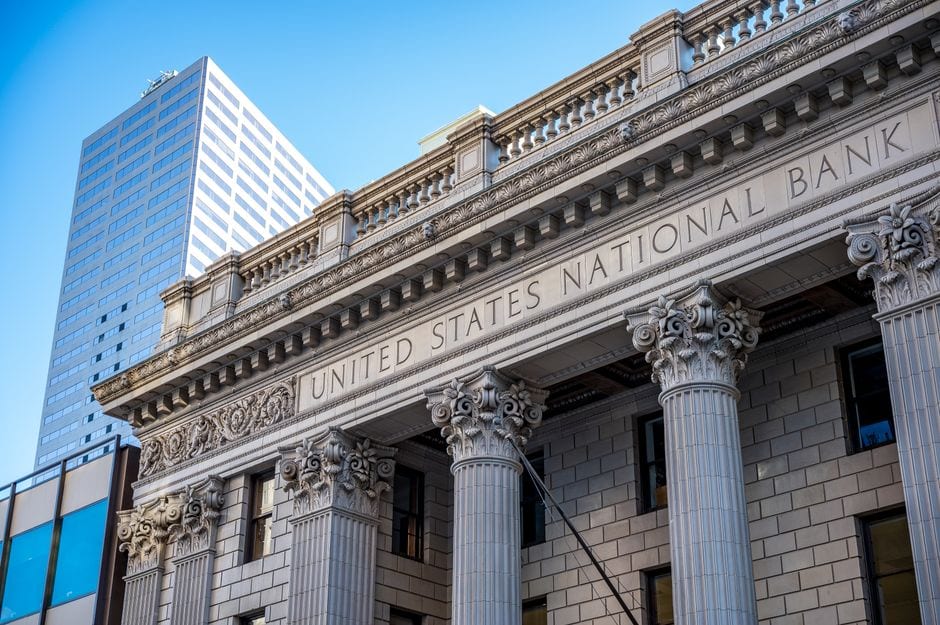
Credit unions and banks insure deposits to the same $250,000 limit, so the real differences are ownership, price and who can join.


NCUA's December 2025 averages show credit unions ahead on borrowing, with new-car loans at 5.44% versus 7.41% at banks, and on CDs. Banks, though, paid more on basic savings and interest checking.


Why it matters: on a $30,000 five-year car loan, that gap is roughly $28 a month. Check eligibility and insurance in NCUA's locator, then compare the actual rate sheets.

AI Money Tool of the Week: Let a Chatbot Find Your Forgotten Subscriptions

A 20-minute exercise with any AI assistant can surface recurring charges you forgot about.

Beyond the Bank

Beyond the Bank

Oct 23, 2026
AI Money Tool of the Week: Let a Chatbot Find Your Forgotten Subscriptions

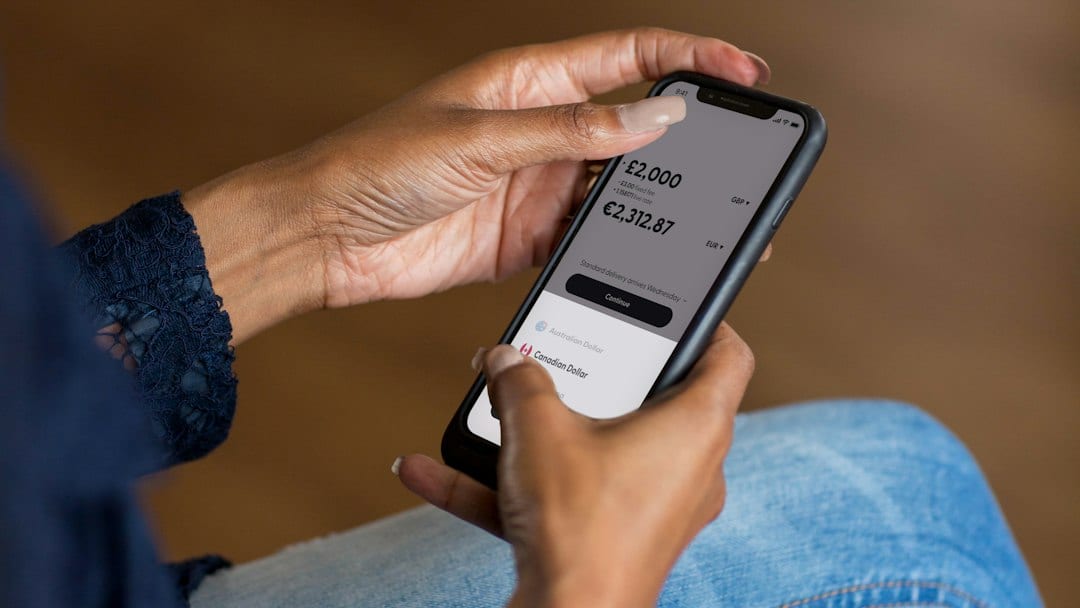
This week's AI money tool is one you probably already have: a general-purpose AI assistant.


How it works: download three months of bank and card transactions, delete everything but the date, merchant and amount, and ask the AI to list every recurring charge with its yearly cost. Then check its list against your statement before canceling anything.


Never share your Social Security number, full account numbers or passwords. No budgeting task needs them.


If a company keeps charging after you cancel, the CFPB explains you can revoke permission with the company and your bank, and request a stop-payment order at least three business days before the next charge.


Why it matters: the FTC's national click-to-cancel rule was struck down in 2025, so your own review is the best protection.

The Open Banking Rule Is Stuck. Here's What It Means for Your Linked Apps

A court has blocked it and the CFPB is rewriting it, possibly letting banks charge fees for your data.

Beyond the Bank

Beyond the Bank

Oct 22, 2026
The Open Banking Rule Is Stuck. Here's What It Means for Your Linked Apps

If you've linked a budgeting or payment app to your bank, you've used open banking. The rule meant to govern it is frozen.


The CFPB's 2024 Section 1033 rule required banks to share your data, at your request, without fees. Banks sued, a federal court in Kentucky blocked enforcement, and the CFPB is rewriting it. A new proposal went to the White House for review on August 6, according to Consumer Finance Monitor, and it may allow fees after a set number of free requests.


Fees are already here: Plaid now pays JPMorgan Chase for customer data, under a 2025 deal.


Why it matters: if data access costs money, apps may raise prices or drop smaller banks. What to do now: review the connected apps in your bank's settings and remove the ones you don't use.

Credit Unions Now Serve 146 Million Americans. Here's How They Differ From Banks

The cooperative model is growing in members and assets while the number of credit unions shrinks.

Beyond the Bank

Beyond the Bank

Oct 21, 2026
Credit Unions Now Serve 146 Million Americans. Here's How They Differ From Banks

International Credit Union Day on October 15 put a spotlight on the oldest banking alternative in America.


NCUA's latest data shows 146.1 million members at federally insured credit unions, up 2.3 million in a year, with $2.50 trillion in assets. But the number of credit unions fell by 156, to 4,214, as smaller ones merge.


How they differ: credit unions are member-owned and not-for-profit, with one vote per member. Deposits are insured to the same $250,000 limit as at banks, through the NCUA.


Why it matters: They aren't automatically better, and rates and fees vary. But for anyone weighing alternatives to big banks, they're the largest one hiding in plain sight.

AI Agents Helped One Hacker Hit Korean Banks. Here's the Lesson for Your Accounts

CrowdStrike says a single attacker used AI tools to break into several South Korean lenders in a matter of weeks.

Beyond the Bank

Beyond the Bank

Oct 20, 2026
AI Agents Helped One Hacker Hit Korean Banks. Here's the Lesson for Your Accounts

Serious bank attacks used to take serious teams. Not anymore.


CrowdStrike reported on October 7 that one attacker used AI agents and an open-source hacking tool called ARTEX to break into multiple South Korean financial firms in a few weeks. Shinhan Bank said about 25,000 customers' personal information was exposed, and at least nine banks have been named as targets, Reuters reported.


Why it matters: AI let one person do a team's work, testing many doors quickly. U.S. regulators have already started asking banks how they use AI in high-risk areas.


What you can do: freeze your credit for free, turn on transaction alerts, use unique passwords or passkeys, and treat any urgent "bank" call after a breach as a likely scam.

The Fed Lays Out the Rules for Bank-Issued Stablecoins

New proposals would let banks issue their own digital dollars, backed one-for-one and barred from paying interest.

Beyond the Bank

Beyond the Bank

Oct 19, 2026
The Fed Lays Out the Rules for Bank-Issued Stablecoins

The last major pieces of America's stablecoin rulebook arrived at the end of September.


On September 24, the Federal Reserve approved two proposals under the GENIUS Act: operating rules for stablecoin issuers it supervises, and an application process for banks that want to launch one. Treasury followed on September 30 with a rule for reviewing state stablecoin regimes.


The key rules: every coin backed one-for-one by cash, Fed balances or short-term Treasuries; redemption within two business days; no interest just for holding; customer assets kept separate.


Why it matters: Banks now have a regulated path to issue digital dollars and defend their deposits. But a stablecoin is still not a bank deposit, and it isn't FDIC-insured.


Comments are due November 30. The law takes effect by January 18, 2027.

Regulators Give Community Banks a New Way to Fight Payment Fraud

A new OCC tool lets smaller banks report suspected fraud to a federal task force.

Beyond the Bank

Beyond the Bank

Oct 18, 2026
Regulators Give Community Banks a New Way to Fight Payment Fraud

Fraudsters rarely hit just one bank. A new federal tool aims to help smaller banks spot repeat schemes sooner.


On October 6, Comptroller Jonathan Gould unveiled a tool letting community banks report suspected payment fraud directly to an OCC task force, with information shared across institutions, American Banker reported.


Why it matters: customers pay for fraud through losses, fees and frozen accounts. Sharing tips across banks can block a scheme before it spreads.


If you're scammed: call your bank immediately using a number you trust, change your passwords, report it at ReportFraud.ftc.gov, and beware of "recovery" scams that charge to get your money back.

Regulator Says Nine Big Banks Debanked Customers. What to Do if Your Account Is Closed

The OCC's report names the nine largest national banks, and the CFPB is opening investigations.

Beyond the Bank

Beyond the Bank

Oct 15, 2026
Regulator Says Nine Big Banks Debanked Customers. What to Do if Your Account Is Closed

A federal regulator says the country's biggest banks closed or refused accounts for reasons that had little to do with financial risk.


On October 14, the OCC released a 47-page report covering 2020 to 2025. It found that nine large banks, including JPMorgan Chase, Bank of America, Citi and Wells Fargo, restricted access based on politics, religion or lawful industries such as firearms, oil and gas, and tobacco, Banking Dive reported. The CFPB says it will investigate. JPMorgan says it doesn't discriminate based on politics or religion.


If your account is closed: ask for the reason in writing, move direct deposits fast, keep a backup account, and file a complaint with the CFPB or the OCC.

Digital Banks Now Win 40% of New U.S. Accounts. Here's What to Weigh Before Switching

App-only banks are winning customers fast, but their fraud losses are climbing too.

Beyond the Bank

Beyond the Bank

Oct 15, 2026
Digital Banks Now Win 40% of New U.S. Accounts. Here's What to Weigh Before Switching

Digital-only banks captured 40% of U.S. accounts opened in the past year, according to a Simon-Kucher study reported by Consulting.us. Nubank and Revolut are on track to open as full U.S. banks in 2027.


Fraud is growing too. Average fraud losses at neobanks and fintechs rose to about $2.84 million per firm, and scams that trick customers into sending money are a fast-growing share, PYMNTS reported.


Before you switch: find the bank behind the app and check it in the FDIC's BankFind tool, turn on every security feature, and test customer service before you need it.

Big Banks Say Their Blockchain Money Is Already Running. What It Means for You

Citi, Wells Fargo and BNY used earnings week to show their digital-deposit plumbing is live.

Beyond the Bank

Beyond the Bank

Oct 14, 2026
Big Banks Say Their Blockchain Money Is Already Running. What It Means for You

Bank blockchain projects are moving from pilots to real use, at least for big business customers.


On October 13, Citi CEO Jane Fraser said its tokenized deposit service now runs in seven markets, PYMNTS reported. Wells Fargo said it launched its own version in September, and BNY settled a tokenized Treasury note in minutes instead of a day.


Why it matters: banks want deposits to move at any hour so money doesn't drift to stablecoins. A tokenized deposit is still a bank deposit; a stablecoin is not, and isn't FDIC-insured.


Your move: nothing changes today. When someone offers you "digital dollars," ask whether it's a deposit or a stablecoin.

Banks Are Cutting Advisers as AI Takes Over. What Changes for Customers

Two large banks tied job cuts directly to AI this month, including wealth advisers.

Beyond the Bank

Beyond the Bank

Oct 13, 2026
Banks Are Cutting Advisers as AI Takes Over. What Changes for Customers

Banks long said AI would help staff, not replace them. This month, two large banks tied job cuts directly to it.


HSBC plans to cut roughly 70% of its UK wealth advisers, the Financial Times reported, via FinTech Futures. Norway's DNB is cutting about 400 jobs as AI agents take over tasks like identity checks and coding.


Why it matters: AI could make advice cheaper and more widely available, but it may miss the personal details a good adviser catches, and accountability can blur.


What to ask: who is responsible for the advice, whether you can still reach a person, what data the tool uses, and whether your fees are going down along with the human time.

American Express's Bank Fined $350 Million Over Money-Laundering Controls

The penalty explains why banks ask so many questions, hold deposits and sometimes close accounts.

Beyond the Bank

Beyond the Bank

Oct 12, 2026
American Express's Bank Fined $350 Million Over Money-Laundering Controls

Ever had a bank ask why you're moving a large sum, or close an account with little explanation? The rules behind that just produced a major penalty.


On October 8, the OCC fined American Express National Bank $350 million for an inadequate anti-money-laundering program, PYMNTS reported. The Federal Reserve issued its own cease-and-desist order against the parent company. Amex settled without admitting the findings.


The rules: under the Bank Secrecy Act, banks must verify customers, monitor transactions and report cash over $10,000 and suspicious activity. Banks often can't legally tell you when they've filed a suspicious activity report.


Why it matters: big fines tend to tighten compliance industry-wide. Keep records of large transactions, never split cash deposits to dodge reporting, and answer your bank's questions promptly.

FedNow Turns Three. Why Your Bank Transfers Still Aren't Instant

More than 1,800 institutions use the Fed's instant payment system, yet Americans barely use instant payments.

Beyond the Bank

Beyond the Bank

Oct 11, 2026
FedNow Turns Three. Why Your Bank Transfers Still Aren't Instant

In Brazil, people pay for coffee with instant bank transfers. In the U.S., moving money can still take days.


The Fed's FedNow service, three years old, now has more than 1,800 participating banks and credit unions. But a Richmond Fed study found Americans make about 0.12 instant payments per person a month, versus about 27 in Brazil.


Why: apps like Zelle and Venmo already feel instant, and deeply rooted card and ACH systems slow change.


Why it matters: faster money helps people living paycheck to paycheck and small businesses. But instant payments are final, so verify who you're paying. Ask your bank whether it offers FedNow or RTP transfers.

AI Scams Cost Americans $893 Million Last Year. Five Habits That Shut Them Down

The FBI counted AI-enabled fraud as its own category for the first time. Its advice comes down to slowing down and verifying.

Beyond the Bank

Beyond the Bank

Oct 9, 2026
AI Scams Cost Americans $893 Million Last Year. Five Habits That Shut Them Down

A cloned voice of a family member, a fake call from your bank, a deepfake video pitch: AI has made old scams far more convincing.


The FBI's 2025 Internet Crime Report logged 22,364 complaints involving AI and nearly $893 million in reported losses. Overall, the FBI said Americans reported nearly $21 billion in losses last year, and people over 60 lost $7.7 billion, up 37%.


AI's real danger is that it removes the tells we rely on. So the best defenses don't depend on spotting the fake.


The five habits: set a family safe word, as the FBI recommends. Hang up and call back on a number you already trust. Treat urgency as the red flag. Limit public audio and video of yourself. And refuse requests to pay strangers by gift card, wire, crypto or payment app.


One free tool most people already have: real-time transaction alerts in your bank or card app, which can give you time to stop a transfer.


Why it matters: As fakes get better, process beats instinct. If you're hit, call your bank right away and report it at ic3.gov.

Canada's Six Biggest Banks Explore a Shared Network for Tokenized Deposits

The plan would let bank money move between institutions instantly, around the clock. America's largest banks are working on their own version for 2027.

Beyond the Bank

Beyond the Bank

Oct 8, 2026
Canada's Six Biggest Banks Explore a Shared Network for Tokenized Deposits

Canada's six largest banks, BMO, CIBC, National Bank, RBC, Scotiabank and TD, are jointly exploring a shared network for tokenized Canadian-dollar deposits, BNN Bloomberg reported on September 22.


A tokenized deposit is an ordinary bank deposit recorded on a blockchain-style ledger. It's still a claim on a regulated bank, unlike a stablecoin, but it can settle in seconds, run 24/7 and carry programmable conditions. The first phase would move these deposits between institutions. No launch date has been set, and one expert called it "really exploratory."


Canada's bank regulator, OSFI, said in September that tokenized deposits are legally the same as traditional ones, as reported by The Block.


In the U.S., JPMorgan, Bank of America, Citigroup and Wells Fargo are building a similar network through The Clearing House, targeting the first half of 2027, Forbes reported.


Why it matters: Banks are rebuilding their payment plumbing to keep deposits from drifting to stablecoins. Businesses should see it first, in payments that settle on weekends. Consumers will feel it later, mostly behind the scenes.


Open questions remain, including how deposit insurance applies to tokenized balances.

The Fintechs Are Becoming Banks: 30-Plus Firms Sought U.S. Charters in 2026

Revolut, Nubank, Mercury and Upstart are among the companies trying to go from renting a bank to being one. Here's what changes for customers.

Beyond the Bank

Beyond the Bank

Oct 7, 2026
The Fintechs Are Becoming Banks: 30-Plus Firms Sought U.S. Charters in 2026

The fintech app on your phone may be about to become an actual bank.


More than 30 neobanks, lenders, payment companies and digital-asset firms have gone through the U.S. bank charter process in 2026, according to an American Banker tracker updated October 2. Only two have been granted full charters. Most hold conditional approvals or are still waiting.


The biggest name is Revolut, which announced conditional OCC approval on September 3. It still needs the FDIC and the Federal Reserve before it can open. Nubank, Mercury, Upstart and Mission Lane also won conditional approvals this year. Bunq was denied.


A charter lets a fintech hold deposits directly and skip the partner-bank middle layer. That layer failed badly in 2024, when the Synapse bankruptcy left many app customers cut off from their money for months. The trade-off is full bank regulation, and a conditional approval is not an open bank.


Why it matters: The line between bank and banking app is blurring, which could mean more competition and fewer fragile middle layers.


Not sure whether your app is a bank? Check its fine print for the partner bank's name, then look it up in the FDIC's BankFind tool.

Regulators Narrow What Counts as 'Unsafe' Banking

New OCC and FDIC rules take effect Nov. 2, telling bank examiners to focus on real financial risk and leave reputation out of it.

Beyond the Bank

Beyond the Bank

Oct 6, 2026
Regulators Narrow What Counts as 'Unsafe' Banking

Two of the country's top bank regulators have rewritten one of their most powerful and vaguest tools, and the change takes effect November 2.


The OCC and FDIC published a final rule on September 1 defining an "unsafe or unsound practice" for the first time. A practice now qualifies only if it breaks prudent standards and threatens, or has caused, material financial harm, meaning damage to capital, asset quality, earnings, liquidity or market-risk sensitivity.


The rule also limits when examiners can issue Matters Requiring Attention, and it explicitly excludes reputation risk unrelated to a bank's finances. That's significant in the long-running fight over banks closing accounts for legal but controversial customers.


Separately, the Fed, FDIC and OCC raised the asset limit for 18-month exam cycles from $3 billion to $6 billion in an interim final rule, making about 188 more banks eligible.


Why it matters: Supporters expect fewer subjective findings and more consistent exams. The risk is acting too late. The Fed's review of Silicon Valley Bank's failure found supervisors flagged problems but didn't push hard enough to fix them.


Your deposit insurance doesn't change: still $250,000 per depositor, per insured bank, per ownership category.

Visa and Mastercard Are Building ID Checks for AI Shoppers

As AI assistants start buying things on our behalf, the card networks are racing to prove who, or what, is behind each payment.

Beyond the Bank

Beyond the Bank

Oct 5, 2026
Visa and Mastercard Are Building ID Checks for AI Shoppers

AI assistants that shop and pay for you are moving from demo to reality, and the card networks are building the identity checks to go with them. The industry calls it agentic commerce.


On September 30, Mastercard announced new trust services for its Agent Pay program, including a probability score that estimates whether a purchase was started by an AI agent rather than a person. Capital One, Cloudflare and Skyfire are involved.


Earlier in September, American Banker reported that Visa launched its own Trusted Agent Protocol, and that Visa, Mastercard and Ant International are working on a shared "know-your-agent" framework, the AI-era version of the identity checks banks run on customers.


The trust gap is wide. Visa research found only 23% of U.S. consumers trust generative AI to handle payments for them, and Mastercard projects about 1 in 10 consumers will routinely use shopping agents by 2030.


Why it matters: Banks and networks want to stay the trusted layer under AI shopping rather than be bypassed. For consumers, the key questions are whether an AI tool lets you set hard spending limits, asks before it buys, and how your card issuer handles disputes over agent-made purchases.


We break down what know-your-agent means and what to watch next.

Newsletter

Never miss a story.

Get the best of Beyond The Bank in your inbox — free, no spam.

Beyond The Bank

© 2026 Beyond The Bank.

The banking system is changing faster than most people realize. Artificial intelligence is reshaping how money moves and who gets access to it, and the infrastructure underneath banking itself is being rebuilt. Beyond the Bank is a weekly briefing on that shift. Every issue breaks down the forces redefining finance: AI in banking and lending, regulation and policy, new banking rails built on blockchain technology, and the rise of community-owned, decentralized alternatives to traditional banks. Plain English, no hype. Written for professionals, business owners, and anyone who wants to understand where their money is headed before everyone else does.

© 2026 Beyond The Bank.

This publication sponsored by