Beyond the Bank
Oct 5, 2026
 |
Welcome to Beyond the Bank |
Welcome to the new Beyond the Bank. Every Monday we break down how artificial intelligence, new payment technology and new rules are reshaping banking, in plain English and without the hype.
This week: the banks leaning hardest into AI are making fewer small business loans, Treasury draws a $10 billion line through the stablecoin market, the fight over who pays for your bank data, and credit unions pass $2.5 trillion in assets. |
Trivia Question❓The world's first cash machine — the ancestor of today's ATM — opened outside a bank branch in which year and which city? Answer at the bottom of the newsletter |
 |
📊 AI is about to show up in banks' credit ratings. S&P Global Ratings said on September 21 that the uneven pace of AI adoption, governance and readiness will increasingly strengthen or weaken banks' credit standing, effectively sorting them into winners and losers. In a June survey of about 179 finance companies, firms expected AI to cut costs by roughly 4%. Read more (Bloomberg)
⚠️ The Bank of England is worried about how AI is being financed. Its Financial Policy Committee warned that "increasing leverage, opacity and, at times, 'circular arrangements'" in AI-related financing "could amplify losses if expectations disappointed." It cited JP Morgan estimates that around $4.1 trillion of AI spending could be financed with debt between 2026 and 2030. Read the FPC record
🌍 FedNow is going cross-border. The Federal Reserve's instant payment service will start handling the U.S. leg of international payments, starting with a test group of early adopters. No wider launch date yet. Read more (PYMNTS) |
 |

Banks are adopting AI faster than almost anyone else — and that may be changing who gets a loan. A new Economic Letter from the Federal Reserve Bank of San Francisco, published September 21, tracked AI hiring across U.S. banks.
AI roles made up 6.8% of banking job postings by the end of 2025, up from under 1% in 2015, well ahead of the economy-wide average of about 2.7%. The big banks lead by a wide margin: 84% of small banks have never posted an AI job.
The heavy AI adopters are more profitable, earning about 0.38 percentage points more on their assets. But they also carry more problem loans, and they lend less to small and midsize businesses: small business loans make up about 12% of their loan books, versus 21% at banks that use AI the least.
Why it matters: Small business lending has long depended on relationships and local judgment, the kind of information that is hard to feed into a model. The researchers found a link, not proof that AI causes the shift. But if you run a small business, the bank you know personally may be a better bet for credit than a giant with the slickest app.
Photo by Vitaly Gariev on Unsplash |
 |
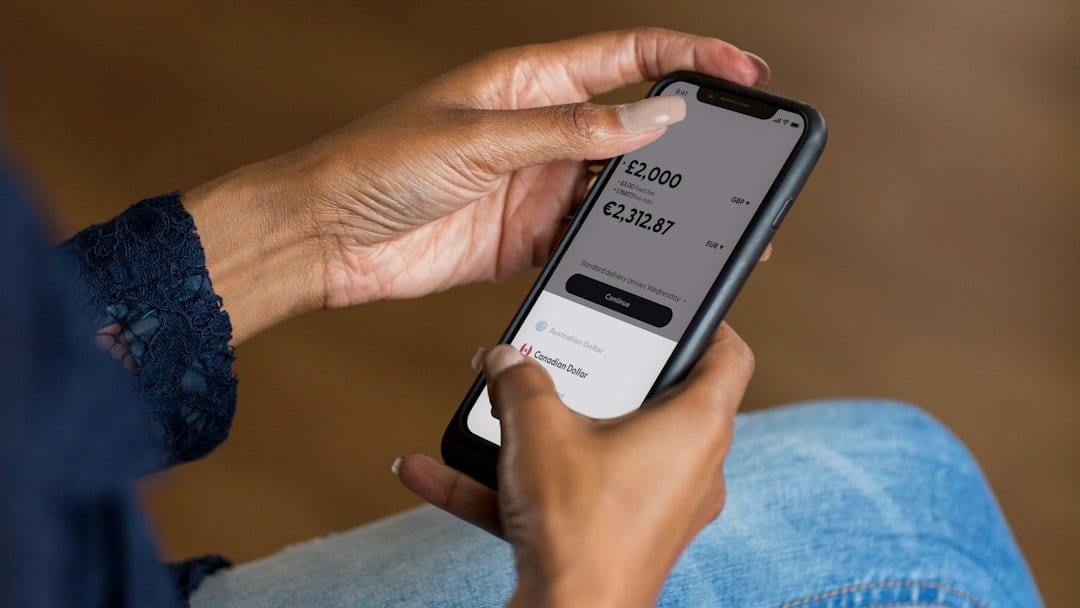
Every time you connect a budgeting app or a payment service to your bank account, you rely on a rule most people have never heard of. It's called Section 1033, and it decides whether your bank has to share your account data with the apps you choose, and on what terms.
The Consumer Financial Protection Bureau finalized an "open banking" rule in October 2024 that required banks to share that data for free. Banks sued, and a court has blocked the rule from being enforced. On August 6, 2026, the CFPB sent a rewrite to the White House's regulatory review office.
Two changes are expected. Banks would likely be allowed to charge fees to apps that pull your data, and apps acting for you may face a stricter test to show each use of your data actually serves you.
Why it matters: If banks can charge apps for access, those costs could show up as higher fees or fewer free tools for you. Watch for a public comment period, possibly by late 2026 or early 2027. That's your chance to weigh in.
Photo by Atlantic Money on Unsplash |
 |
One of the oldest alternatives to big banks keeps growing. Credit unions are owned by their members rather than outside shareholders, and according to the National Credit Union Administration, federally insured credit unions held $2.50 trillion in assets at the end of June, up 5.0% from a year earlier.
Loans grew 4.9% to $1.76 trillion, and member deposits rose 4.3% to $1.91 trillion. Delinquencies ticked up slightly, to 0.96% of loans.
Why it matters: As banks automate and consolidate, community-owned institutions are holding their own. Because members are the owners, profits tend to come back as lower loan rates, higher savings rates or fewer fees, though that varies a lot from one credit union to the next. It's worth comparing before you assume a big bank is your only option. |
 |
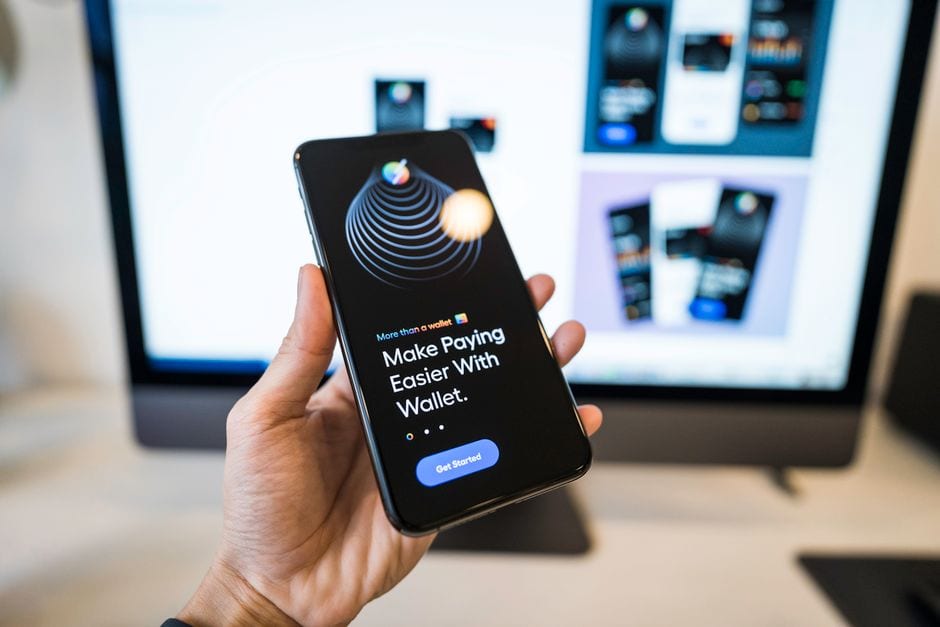
Stablecoins are digital tokens designed to always be worth one dollar. They move on blockchain networks, settle in seconds and work around the clock, which is why banks, payment companies and retailers are paying attention. For years they operated with little federal oversight. That is ending.
The law. The GENIUS Act, signed in July 2025, set the first federal rules for "payment stablecoins." Under the Office of the Comptroller of the Currency's proposed rules, issuers must hold one dollar of safe assets for every coin: cash, short-term Treasury bills and similar instruments. Other crypto doesn't count. They must publish their reserves every month, and they can't pay holders interest.
The new rule. On September 30, Treasury issued its first rule under the law, setting up the committee that decides whether a state's stablecoin rules are strong enough to stand in for federal oversight. The key number is $10 billion. Issuers with $10 billion or less in coins outstanding can choose a qualifying state regulator. Above that, they generally must move under federal supervision within 360 days. That means the biggest stablecoins will answer to Washington, while smaller issuers get a state option.
The dates to watch:
Why it matters: Clear rules are what large banks and payment companies have been waiting for. Expect more of them to use stablecoins quietly behind the scenes for payments and settlement. For you, the practical upshot is that a regulated dollar stablecoin should be backed by real reserves you can check monthly. It is still not a bank deposit, and it is not FDIC insured.
Photo by Tranmautritam on Pexels |
 |
The tool: any mainstream AI chat assistant you already use. The job: finding the recurring charges you forgot about.
How to do it:
Why it's worth 10 minutes: Subscriptions are built to be forgotten, and price increases often arrive by email you never open. One pass usually turns up at least one charge you meant to cancel.
Privacy tip: Never paste account numbers, passwords or login details into any AI tool, and check your assistant's settings for an option to keep your chats out of model training. |
 |
I asked an AI to help me cut my monthly spending. Its first recommendation: cancel my AI subscription.
Honest, at least. We'll give it that. |
💡 Answer to Trivia Question: 1967, at a Barclays branch in Enfield, north London (June 27, 1967). |
 |
Know someone who should be reading this? Forward this email, or send them to beyondthebank.capital to subscribe free. New issue every Monday.
Questions, tips or story ideas? Email us at contact@beyondthebank.capital.
Beyond the Bank is for informational purposes only and is not financial, legal, or investment advice. |