Beyond the Bank
Oct 12, 2026
 |
Welcome back to Beyond the Bank |
Your bank counts on you not moving your money. Most checking accounts pay next to nothing, and banks lend those cheap deposits out at much higher rates. At the end of September, a top Wall Street economist warned that AI assistants could break that habit for millions of people at once.
This week: the "agentic bank run" warning, what the Fed's first rate hike since 2023 means for your savings, a 49% jump in bank AI hiring, and credit unions nearing 420 million members worldwide. |
Trivia Question❓The FDIC began insuring bank deposits on January 1, 1934. How much did it cover per depositor back then? Answer at the bottom of the newsletter |
 |
🤖 Wall Street is hiring for AI agents, fast. AI-related job postings at major banks rose 49% to 139,819 this year, and mentions of "agent orchestration" jumped more than 1,700%, according to Draup hiring data reported by PYMNTS. JPMorgan's chief analytics officer said its newer agents can work without human input for "an hour or two." Read more (PYMNTS)
🛡️ The Fed wants to stop payments to the wrong person. Its Payee Name Verification service lets banks check that a recipient's name matches the account and routing number before money moves, using 12 months of payment history. It's aimed at scams where victims are tricked into sending money themselves. How it works (Federal Reserve)
🤝 A report card for bank-fintech partnerships is in the works. The FDIC is talking with banking and fintech trade groups about an independent, voluntary body that would certify tech vendors against federal standards. The goal: make it cheaper and safer for community banks to partner with fintechs. The Fed and OCC haven't formally joined yet. Read more (American Banker) |
 |
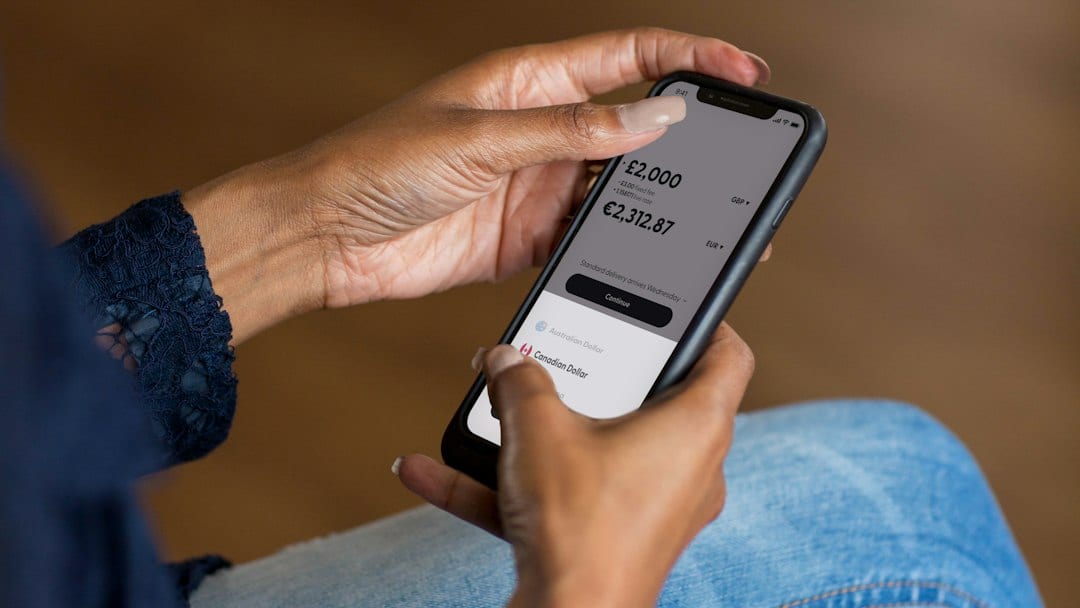
Banks have a quiet advantage: most of us never move our money. Apollo Global Management chief economist Torsten Slok says AI could end that.
In a note titled "Is an agentic bank run coming?", reported by CoinDesk on September 28, Slok pointed out that the average checking account pays about 0.1% a year, while many online accounts pay roughly 3.3% to 5%. On a $10,000 balance, that's about $10 a year versus $330 to $500.
Most people leave the money where it is because switching is a hassle. An AI assistant that automatically moves idle cash to the best rate removes the hassle. "If every household used AI agents to optimize the return on their cash balances, banks could lose a large share of the cheap deposits they rely on to make loans, which would be a problem for the entire financial system," Slok wrote.
The bigger risk is speed. A traditional bank run takes people lining up or logging in. Agents watching the same signals could all move money at once.
Why it matters: This is a warning, not a trend yet. But it explains why banks are suddenly so interested in controlling the AI assistants that touch your accounts. The Fed's September rate hike makes the gap between a near-zero checking account and a high-yield one even bigger. You don't need an AI agent to close it: compare what your savings earns with the FDIC's national average rates, and make sure any account you move to is FDIC- or NCUA-insured.
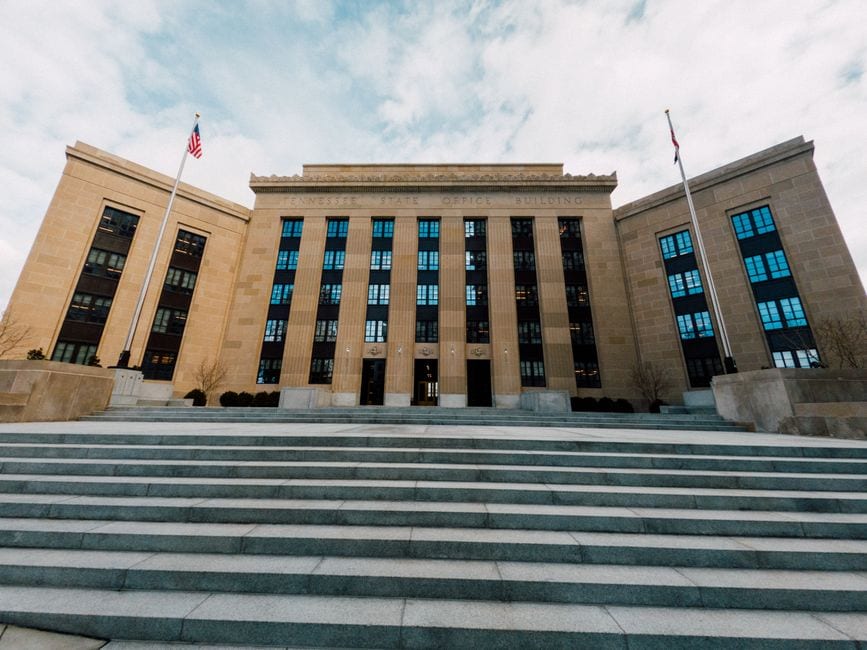
Illustrative photo. Photo by Atlantic Money on Unsplash |
 |
After years of talk about rate cuts, the Fed went the other way. On September 16, the Federal Open Market Committee voted 12-0 to raise its benchmark rate by a quarter point, to a range of 3.75% to 4.00%, its implementation note shows. It was the first increase since 2023. The Fed said inflation "remains elevated" and that the move should support "a timelier return" to its 2% goal.
What it means for your money
Dates to watch: September inflation data (CPI) comes out Wednesday, October 14, and the Fed meets again October 27–28, according to Chase's rate explainer.
Why it matters: Higher rates reward savers who shop around and penalize borrowers who carry balances. Paying down variable-rate debt is now worth more than it was a month ago.
Photo by K on Pexels |
 |

The member-owned model isn't just an American thing. The World Council of Credit Unions' 2025 Statistical Report, released September 3, counted nearly 420 million members at 61,638 credit unions and cooperatives across 93 countries, according to America's Credit Unions.
Together they hold about $3.98 trillion in assets and $2.83 trillion in loans. North America accounts for roughly three-quarters of those assets, while Asia, Latin America and Africa make up a large share of the members.
The report flagged two forces expected to shape the next five years: regulation and digital competition. In other words, the same fintech apps and AI tools pressuring banks are pressuring credit unions too.
Why it matters: A credit union is owned by its members, so profits tend to come back as better rates or lower fees rather than shareholder dividends. If you've never compared one with your bank, it's worth a look. Make sure it's federally insured through the NCUA's credit union locator.
Illustrative photo. Photo by Dylan Gillis on Unsplash |
 |
The tool: any mainstream AI chat assistant. The job: showing you, in dollars, what a low-rate account costs you each year. No agent needs access to your bank.
How to do it:
Why it's worth 10 minutes: Rates just went up. Seeing the gap as a dollar figure is usually what finally gets people to move the money they meant to move months ago.
Privacy tip: Use round numbers. An AI assistant never needs your account numbers, login or full name to do this math. |
 |
My AI assistant finally found me a better savings rate. Then it asked for a raise.
Turns out it had been doing the math on its own value, too. |
 |

A cloned voice of a family member, a fake call from your bank, a deepfake video pitch: AI has made old scams far more convincing.
The FBI's 2025 Internet Crime Report logged 22,364 complaints involving AI and nearly $893 million in reported losses. Overall, the FBI said Americans reported nearly $21 billion in losses last year, and people over 60 lost $7.7 billion, up 37%.
AI's real danger is that it removes the tells we rely on. So the best defenses don't depend on spotting the fake.
The five habits: set a family safe word, as the FBI recommends. Hang up and call back on a number you already trust. Treat urgency as the red flag. Limit public audio and video of yourself. And refuse requests to pay strangers by gift card, wire, crypto or payment app.
One free tool most people already have: real-time transaction alerts in your bank or card app, which can give you time to stop a transfer.
Why it matters: As fakes get better, process beats instinct. If you're hit, call your bank right away and report it at ic3.gov. Read More... |

Canada's six largest banks, BMO, CIBC, National Bank, RBC, Scotiabank and TD, are jointly exploring a shared network for tokenized Canadian-dollar deposits, BNN Bloomberg reported on September 22.
A tokenized deposit is an ordinary bank deposit recorded on a blockchain-style ledger. It's still a claim on a regulated bank, unlike a stablecoin, but it can settle in seconds, run 24/7 and carry programmable conditions. The first phase would move these deposits between institutions. No launch date has been set, and one expert called it "really exploratory."
Canada's bank regulator, OSFI, said in September that tokenized deposits are legally the same as traditional ones, as reported by The Block.
In the U.S., JPMorgan, Bank of America, Citigroup and Wells Fargo are building a similar network through The Clearing House, targeting the first half of 2027, Forbes reported.
Why it matters: Banks are rebuilding their payment plumbing to keep deposits from drifting to stablecoins. Businesses should see it first, in payments that settle on weekends. Consumers will feel it later, mostly behind the scenes.
Open questions remain, including how deposit insurance applies to tokenized balances. Read More... |
The fintech app on your phone may be about to become an actual bank.
More than 30 neobanks, lenders, payment companies and digital-asset firms have gone through the U.S. bank charter process in 2026, according to an American Banker tracker updated October 2. Only two have been granted full charters. Most hold conditional approvals or are still waiting.
The biggest name is Revolut, which announced conditional OCC approval on September 3. It still needs the FDIC and the Federal Reserve before it can open. Nubank, Mercury, Upstart and Mission Lane also won conditional approvals this year. Bunq was denied.
A charter lets a fintech hold deposits directly and skip the partner-bank middle layer. That layer failed badly in 2024, when the Synapse bankruptcy left many app customers cut off from their money for months. The trade-off is full bank regulation, and a conditional approval is not an open bank.
Why it matters: The line between bank and banking app is blurring, which could mean more competition and fewer fragile middle layers.
Not sure whether your app is a bank? Check its fine print for the partner bank's name, then look it up in the FDIC's BankFind tool. Read More... |
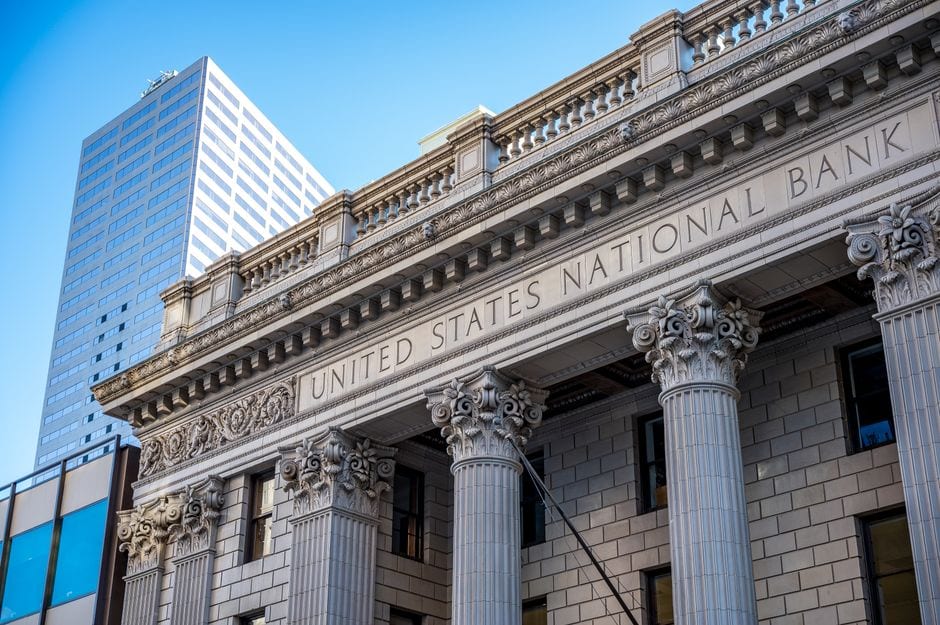
Two of the country's top bank regulators have rewritten one of their most powerful and vaguest tools, and the change takes effect November 2.
The OCC and FDIC published a final rule on September 1 defining an "unsafe or unsound practice" for the first time. A practice now qualifies only if it breaks prudent standards and threatens, or has caused, material financial harm, meaning damage to capital, asset quality, earnings, liquidity or market-risk sensitivity.
The rule also limits when examiners can issue Matters Requiring Attention, and it explicitly excludes reputation risk unrelated to a bank's finances. That's significant in the long-running fight over banks closing accounts for legal but controversial customers.
Separately, the Fed, FDIC and OCC raised the asset limit for 18-month exam cycles from $3 billion to $6 billion in an interim final rule, making about 188 more banks eligible.
Why it matters: Supporters expect fewer subjective findings and more consistent exams. The risk is acting too late. The Fed's review of Silicon Valley Bank's failure found supervisors flagged problems but didn't push hard enough to fix them.
Your deposit insurance doesn't change: still $250,000 per depositor, per insured bank, per ownership category. Read More... |
 |
Know someone who should be reading this? Forward this email, or send them to beyondthebank.capital to subscribe free. New issue every Monday.
Missed an issue? Read the latest issue online or browse past issues.
Questions, tips or story ideas? Email us at newsletter@beyondthebank.capital.
Beyond the Bank is for informational purposes only and is not financial, legal, or investment advice. |
💡 Answer to Trivia Question: $2,500. Today the standard limit is $250,000 per depositor, per insured bank, for each ownership category. |