Beyond the Bank
Oct 19, 2026
 |
Welcome back to Beyond the Bank |
Your bank's chatbot used to answer questions. Now it's starting to take action. AI agents that can cancel a lost card or chase down a missing payment are live at more than ten banks, and they're changing what "customer service" means.
This week: what agentic customer service means for you, why Chime is buying a bank, the mobile wallet behind the Philippines' record IPO, and a 10-minute AI trick for disputing a credit card charge. Plus, in case you missed it: a regulator's report that nine big banks debanked customers. |
Trivia Question❓Which card, launched in 1950, is widely considered the first multipurpose charge card? Answer at the bottom of the newsletter |
 |
🏛️ Delayed community-lending grants are out. On September 15, Treasury's CDFI Fund announced its FY 2025 awards for community development financial institutions, which lend in underserved areas, plus FY 2026 awards for its Bank Enterprise and Small Dollar Loan programs. The FY 2025 money was about two weeks from expiring. Treasury says it will step up audits of recipients. Read more (CDFI Fund)
🚪 Fintechs are still waiting on a side door to the Fed. The Fed's proposed "payment account" would give eligible institutions direct access to FedNow and Fedwire, but not the ACH system, with balances generally capped at $1 billion. Comments closed July 27. Community banks want tight limits; the Financial Technology Association says it isn't practical access without ACH. No final decision yet. Read more (PYMNTS)
📅 Mark your calendar: the Fed meets October 27–28. It's the first meeting since September 16, when the Fed raised rates a quarter point to a range of 3.75% to 4%, its first increase since 2023. Variable-rate debt like credit cards and HELOCs moves first when rates change. Fed meeting calendar |
 |

Bank chatbots have mostly been glorified FAQ pages. That's starting to change.
On October 8, banking software company Backbase made its Conversational Banking product generally available, FinTech Global reported. It uses AI agents, software that carries out tasks on its own, to handle requests made in plain language, such as canceling and reissuing a lost card or checking on a payment. It's already live at more than ten banks.
At one of South Africa's four largest lenders, the system has handled 22 million customer interactions and raised the share resolved without a human from 20% to 70%, according to the company. Backbase also cites McKinsey research estimating agentic AI could cut bank operating costs by 15% to 20%.
The guardrails: each bank decides what the agent can see and do, and where a human must sign off. Customers must confirm significant actions, and every step is logged. When a problem needs judgment, the agent hands the case to a person with a summary of what it already tried.
Why it matters: Faster fixes for routine problems are a real win. But an agent that can act on your account raises new questions. Before you say "yes" to an AI assistant, read exactly what it's about to do, and know how to reach a person. If an agent makes a mistake, your rights to dispute errors on your account still apply.
Illustrative photo. Photo by Paul Hanaoka on Unsplash |
 |
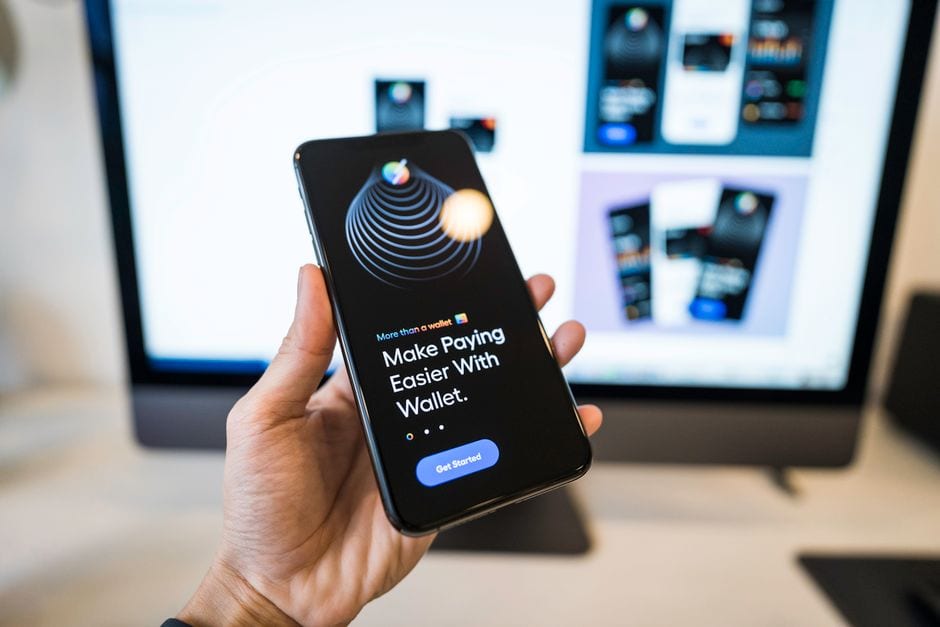
One of America's biggest banking apps has never actually been a bank. Chime wants to change that.
Last month, Chime agreed to buy Stride Bank, its banking partner of about seven years, for $590 million in cash, Banking Dive reported on September 8. Stride, based in Enid, Oklahoma, holds a national bank charter and about $5.4 billion in assets. After the deal closes, it will be renamed Chime Bank.
Chime had about 10.4 million active members as of mid-2026. It expects about $100 million in net savings, mostly from no longer paying partner-bank fees, and expects the deal to close in the first half of 2027, pending regulatory approval.
Buying an existing bank lets Chime skip the slow, capital-heavy process of starting one from scratch. It's a different route than the one Revolut and Nubank took, applying for new charters, as we've covered.
Why it matters: Nothing changes for Chime members yet. Over time, owning a bank could mean deposits held directly, rather than through a partner, and more control over products like lending. Analysts have flagged risks, too: Stride serves other fintechs, and Chime says it plans to keep assets under $10 billion for now. Watch for regulators' decision.
Illustrative photo. Photo by Tranmautritam on Pexels |
 |

In much of the world, the most important financial account isn't at a bank. It's on a phone.
Mynt, the company behind the Philippine mobile wallet GCash, priced its initial public offering at PHP 6.60 a share, valuing it at about $7 billion, FinTech Futures reported, citing The Wall Street Journal. Including extra shares, the offering could raise up to PHP 60.9 billion (about $971 million), which Mynt says would make it the largest ever on the Philippine Stock Exchange in peso terms. Trading is expected to begin Tuesday, October 20, pending approvals.
GCash had 41.5 million monthly active users in the second quarter of 2026, in a country of roughly 115 million people. Its net income rose 55% in 2025, to PHP 17.25 billion.
Like Brazil's Pix system and India's UPI, GCash shows how fast people adopt digital money when it's easier than a traditional bank. Many users send money, pay bills, save and borrow without ever visiting a branch.
Why it matters: This is a trend story, not a stock tip. The U.S. is moving slower, as our look at FedNow at three explained. But the companies building American banking apps are watching what works abroad, and the line between a wallet and a bank keeps blurring.
Makati, Philippines. Photo by Josh Eleazar on Pexels |
 |
The tool: any mainstream AI chat assistant. The job: turning a frustrating billing problem into a clear, organized dispute letter in a few minutes.
When to use it: you were charged twice, billed for something that never arrived, or charged the wrong amount, and the merchant won't fix it.
How to do it:
Mind the clock: for billing errors, federal law generally requires you to dispute in writing within 60 days after the statement showing the error was sent, the FTC explains.
Privacy tip: Never paste your full card number, account number or login into a chatbot. The AI only needs the story, not your credentials. |
Missed these? The week's biggest story was a federal regulator's finding that nine of the largest U.S. banks debanked customers, plus what to do if your bank closes your account. |
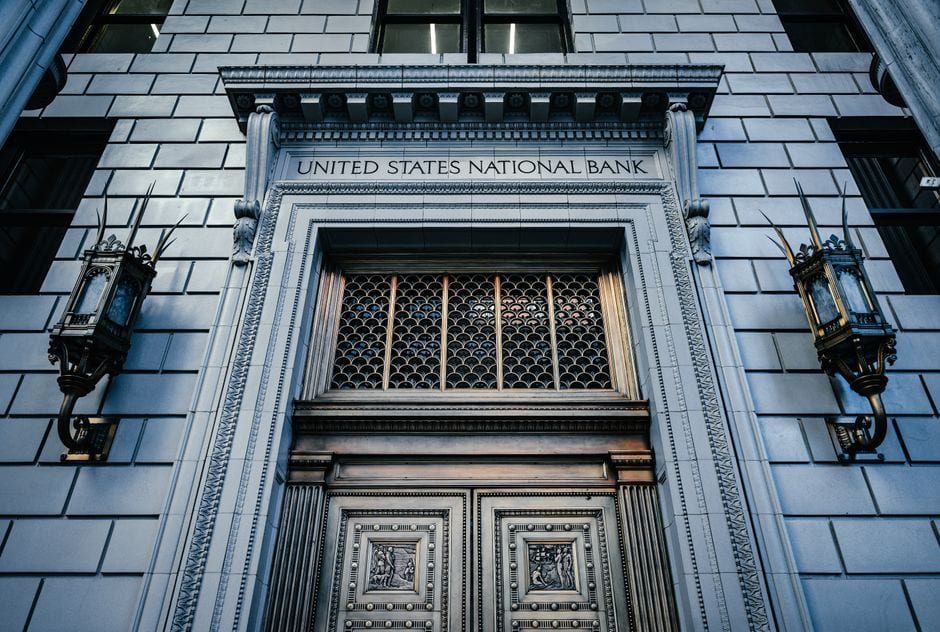
A federal regulator says the country's biggest banks closed or refused accounts for reasons that had little to do with financial risk.
On October 14, the OCC released a 47-page report covering 2020 to 2025. It found that nine large banks, including JPMorgan Chase, Bank of America, Citi and Wells Fargo, restricted access based on politics, religion or lawful industries such as firearms, oil and gas, and tobacco, Banking Dive reported. The CFPB says it will investigate. JPMorgan says it doesn't discriminate based on politics or religion.
If your account is closed: ask for the reason in writing, move direct deposits fast, keep a backup account, and file a complaint with the CFPB or the OCC. Read More... |

Bank blockchain projects are moving from pilots to real use, at least for big business customers.
On October 13, Citi CEO Jane Fraser said its tokenized deposit service now runs in seven markets, PYMNTS reported. Wells Fargo said it launched its own version in September, and BNY settled a tokenized Treasury note in minutes instead of a day.
Why it matters: banks want deposits to move at any hour so money doesn't drift to stablecoins. A tokenized deposit is still a bank deposit; a stablecoin is not, and isn't FDIC-insured.
Your move: nothing changes today. When someone offers you "digital dollars," ask whether it's a deposit or a stablecoin. Read More... |

Digital-only banks captured 40% of U.S. accounts opened in the past year, according to a Simon-Kucher study reported by Consulting.us. Nubank and Revolut are on track to open as full U.S. banks in 2027.
Fraud is growing too. Average fraud losses at neobanks and fintechs rose to about $2.84 million per firm, and scams that trick customers into sending money are a fast-growing share, PYMNTS reported.
Before you switch: find the bank behind the app and check it in the FDIC's BankFind tool, turn on every security feature, and test customer service before you need it. Read More... |

Banks long said AI would help staff, not replace them. This month, two large banks tied job cuts directly to it.
HSBC plans to cut roughly 70% of its UK wealth advisers, the Financial Times reported, via FinTech Futures. Norway's DNB is cutting about 400 jobs as AI agents take over tasks like identity checks and coding.
Why it matters: AI could make advice cheaper and more widely available, but it may miss the personal details a good adviser catches, and accountability can blur.
What to ask: who is responsible for the advice, whether you can still reach a person, what data the tool uses, and whether your fees are going down along with the human time. Read More... |

Ever had a bank ask why you're moving a large sum, or close an account with little explanation? The rules behind that just produced a major penalty.
On October 8, the OCC fined American Express National Bank $350 million for an inadequate anti-money-laundering program, PYMNTS reported. The Federal Reserve issued its own cease-and-desist order against the parent company. Amex settled without admitting the findings.
The rules: under the Bank Secrecy Act, banks must verify customers, monitor transactions and report cash over $10,000 and suspicious activity. Banks often can't legally tell you when they've filed a suspicious activity report.
Why it matters: big fines tend to tighten compliance industry-wide. Keep records of large transactions, never split cash deposits to dodge reporting, and answer your bank's questions promptly. Read More... |
 |
I asked my bank's new AI agent to cancel my lost card. It did it in four seconds.
Then it asked if I'd like a reminder to stop leaving my wallet at restaurants. I said no. It set one anyway. |
 |
Know someone who should be reading this? Forward this email, or send them to beyondthebank.capital to subscribe free. New issue every Monday.
Missed an issue? Read the latest issue online or browse past issues.
Questions, tips or story ideas? Email us at contact@beyondthebank.capital.
Beyond the Bank is for informational purposes only and is not financial, legal, or investment advice. |
💡 Answer to Trivia Question: Diners Club. It started in 1950 as a way to pay at a small group of New York restaurants, then spread to hotels, airlines and stores. |